(303)-888-2008 sales@biolynceus.net

Featured Wastewater Case Studies
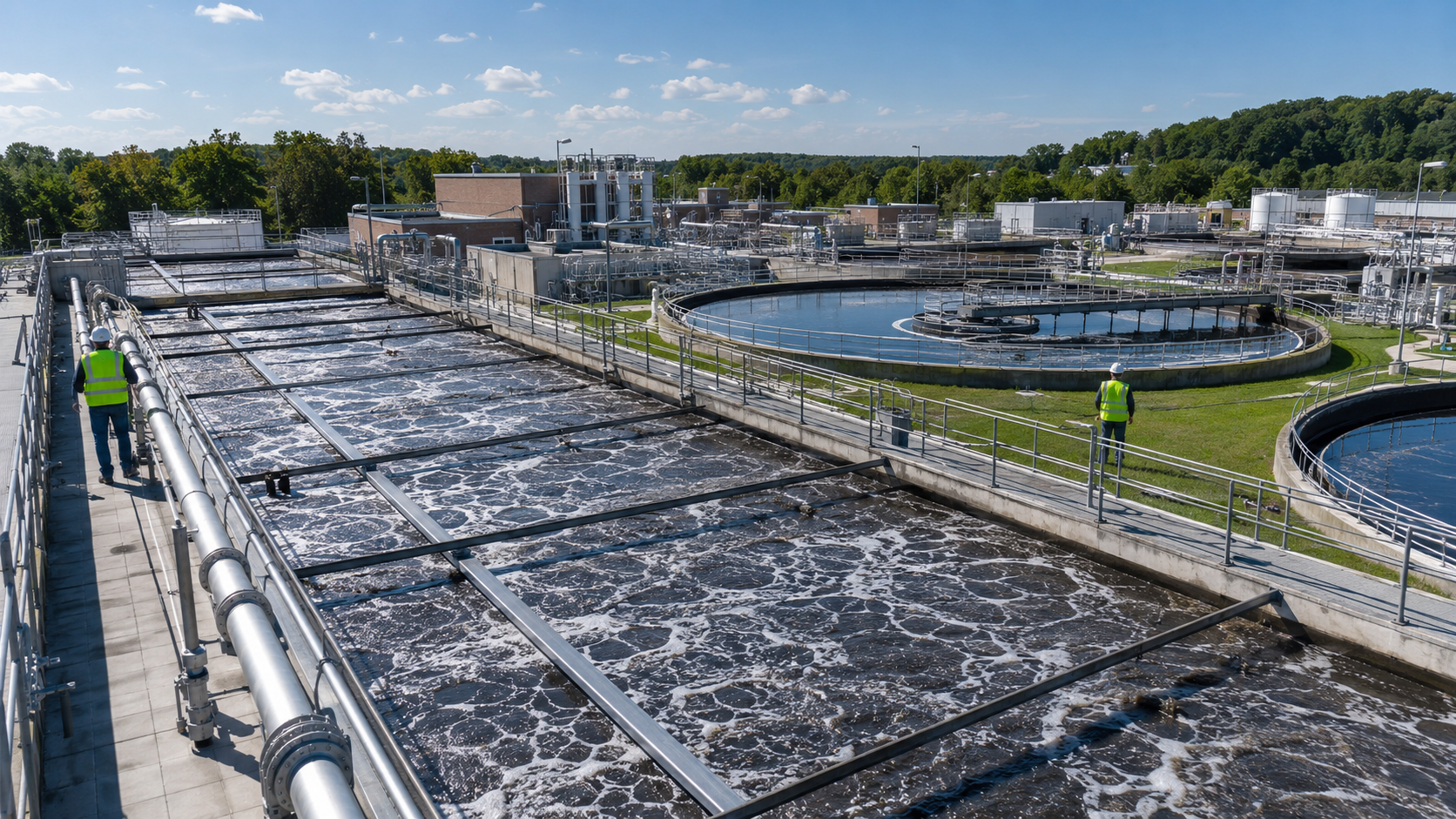
At BioLynceus®, we deliver natural solutions with proven results.

Our biological programs are designed to restore lagoon and wastewater system performance, reduce sludge buildup, control odors, and help facilities meet permit limits—often without the need for major capital upgrades. Across a wide range of applications, BioLynceus® has successfully addressed challenges such as sludge accumulation, odor and hydrogen sulfide (H₂S) generation, elevated BOD and COD, ammonia and nitrogen exceedances, phosphorus removal, FOG buildup, filamentous bulking, and seasonal or shock loading events.

Our expertise extends to diverse treatment systems, including lagoons, ponds, aerated lagoons, mechanical wastewater treatment plants, and industrial wastewater facilities. Whatever the issue, BioLynceus® provides tailored biological solutions that help communities and industries achieve consistent, sustainable wastewater performance.

Talk to a BioLynceus® Specialist to learn how we can help optimize your system naturally.


Here are a few quick overviews of solutions we’ve delivered for our clients. To learn more about other projects and the results we’ve achieved, check out our detailed case studies.

BioLynceus® Candy Carbon® – Denitrification at an Industrial Wastewater Treatment Plant

Industry: Industrial Wastewater Treatment (0.7 MGD)
Issue: Elevated nitrate levels due to incomplete denitrification in the anoxic zone.
Challenge: The treatment plant’s biological nutrient removal process lacked sufficient organic carbon for denitrifying bacteria to perform efficiently. Despite successful nitrification in the aeration basin, denitrification was limited, leading to excess nitrate in the discharge.
Solution: BioLynceus® implemented a targeted Candy Carbon® program, delivering a consistent, high-quality organic carbon source directly to the anoxic zone. This supplementation balanced the microbial population and enabled complete denitrification.
Statistics: Candy Carbon® was applied at 1.5 to 2 gallons per day. Over four months, nitrate removal improved dramatically, with the nitrate removal-to-accumulation ratio increasing from 3:1 to 12:1, indicating sustained biological performance and fewer periods of incomplete removal.
Key Results:

  • Denitrification restored within one month of treatment.

  • Significant reduction in nitrate accumulation events.

  • Improved effluent quality and reduced nutrient loading to the settling basin.

  • Demonstrated success of BioLynceus® Candy Carbon® as an efficient, natural carbon source for industrial denitrification.

[View Full Case Study Here]

BioLynceus® Candy Carbon® – Denitrification at an Activated Sludge Wastewater Treatment Plant

Industry: Municipal Wastewater Treatment (0.2 MGD)
Issue: Elevated nitrate levels in effluent due to incomplete denitrification in the activated sludge process.
Challenge: The facility struggled to maintain effective biological nutrient removal (BNR) because internal carbon sources were depleted during aeration, leaving insufficient organic carbon for denitrifying bacteria in the anoxic zone. This imbalance risked permit violations for nitrate discharge and reduced treatment efficiency.
Solution: BioLynceus® introduced Candy Carbon®, a high-quality organic carbon supplement, applied directly to the anoxic zone to restore denitrification activity. This provided the denitrifying bacteria with a consistent carbon source, enabling complete nitrate reduction.
Statistics: The plant treated 0.2 MGD and began daily dosing of Candy Carbon®. Within days, nitrate concentrations in the effluent decreased markedly. Over the treatment year, monthly nitrate removal increased compared to the prior year, with improvements ranging from 0 mg/L (winter) to 16 mg/L (summer).
Key Results:

  • Denitrification re-established within days of Candy Carbon® application.

  • Monthly nitrate removal improved across all seasons.

  • Effluent nitrogen levels reduced, helping the facility maintain permit compliance.

  • Demonstrated Candy Carbon® as an effective external carbon source for BNR optimization.

[View Full Case Study Here]

BioLynceus® ProBiotic Scrubber® II & Candy Carbon® – Biomass Stabilization in a Municipal Activated Sludge Plant

Industry: Municipal Wastewater Treatment (0.2 MGD)
Issue: Biomass loss and poor treatment performance following high infiltration and inflow (I&I) events.
Challenge:
A 0.2 MGD activated sludge plant in Oregon struggled to maintain biological stability during periods of heavy precipitation. High I&I diluted the influent organic substrate and washed out established biomass in the aeration basins. As a result, the biological oxygen demand (BOD) removal efficiency dropped sharply after storm events, leaving the plant unable to maintain treatment consistency. Traditional methods, such as re-inoculating with activated sludge, were costly, labor-intensive, and prone to additional operational complications.

Solution:
BioLynceus® implemented a dual-treatment program using ProBiotic Scrubber® II (PBII) and Candy Carbon® (CC). PBII provided a robust consortium of wastewater microorganisms to restore biological activity, while CC supplied a readily available organic carbon source to support biomass development. This bioaugmentation approach was applied directly to the aeration basins following washout events to quickly reestablish biological performance.

Statistics:

  • PBII and CC were applied immediately after high I&I events.

  • Biomass recovery was observed within several days of treatment.

  • The restored biology improved settling characteristics and enhanced nutrient removal efficiency.

Key Results:

  • Rapid restoration of biomass and treatment stability following storm-related washouts.

  • Improved influent processing and biological nutrient removal.

  • Reduced downtime and operational costs compared to traditional sludge re-inoculation.

  • Demonstrated the effectiveness of BioLynceus® ProBiotic Scrubber® II and Candy Carbon® as a biological recovery and stabilization solution for municipal wastewater systems.

[View Full Case Study Here]

Toxic Hit Recovery at a Mechanical Wastewater Treatment Plant

Wastewater treatment utilities receiving inputs fromindustrial and anthropogenic sources are highlysusceptible to toxic waste inputs. Toxic loads are oftensporadic and can be extremely devastating to thebiomass in treatment facilities.Figure 1. Toxic impacts on a...

Toxicity Treatment in a Wastewater Lagoon System

Municipal wastewater lagoon systems are susceptible to toxic waste poisoning. Toxic loads from residences and businesses are sporadic and difficult to mitigate. When toxicity levels are high in wastewater lagoons, the biological treatment process is inhibited due to...

Toxicity Treatment in a Municipal Wastewater Lagoon System

Wastewater lagoon systems often experience biological upsets when toxic loads are introduced. Specifically, the chemicals used in illicit drug manufacturing can cause significant harm to the microbial communities in surface waters.1 Municipal lagoon systems are...

Toxicity Treatment in a Facultative Lagoon System

The biology in wastewater lagoons can be significantly impacted by toxic substances introduced from illicit drug manufacturing. Surface waters contaminated with amphetamines, and the chemicals used to manufacture them, are known to suppress aquatic life, including...

Toxicity Treatment in an Oil Refinery Aerated Lagoon System

In need of a recovery plan for their wastewatertreatment system, an industrial oil refinery in NewMexico used BioLynceus® to restart their biologicaltreatment after a toxic hit. The refinery was processing50,000 barrels of crude oil a day.Figure 1. Large oil refinery...

Toxicity Mitigation in an Industrial Sequencing Batch Reactor

Managing toxic loadings at industrial wastewater treatment facilities can be challenging. Influent from food processing industries can introduce harmful cleaning products. The book Wastewater Bacteria, by Michael Gerardi, explains cleaning chemical surfactants can be...

Startup of a Fixed-Film Activated Sludge Process

Establishing a functional biological community for wastewater treatment is essential when starting a new plant. Monitoring the growing biology during a startup provides the insight plant staff need to adjust operations to achieve a high treatment efficiency....

Startup of a Moving Bed Biofilm Reactor

National parks attract millions of visitors each year.Increasing seasonal traffic experienced by theseestablishments can overload the wastewater treatmentinfrastructure leading to treatment inefficiency and,eventually, structural replacement. When starting up anew...

Startup Mechanical Plant After Failed Activated Sludge Seeding

Choosing an appropriate seeding method for wastewater operations can have a significant impact on biological treatment efficiency. Activated sludge is traditionally used to seed new treatment systems and supplement others that need bioaugmentation. A common issue in...

Start-Up of a 6.7 MGD Anaerobic Digester at a Sugar Refinery

Halfway through a sugar beet processing campaign(September through May) a Midwest refinery noticedsomething was wrong with their wastewater processingsystem. The plant discharge was within limits for their NPDESpermit parameters, but the chemical oxygen demand...

Nitrification with ProBiotic Scrubber® N in an Activated Sludge Plant

An effective activated sludge system has the capacity to remove ammonia from influent wastewater via nitrification. Several factors impacting efficient ammonia and nitrite oxidation in wastewater treatment include, temperature, and abundance of carbonaceous and...

Nitrification Bioaugmentation in an Activated Sludge Process

Augmenting wastewater processes with culturesof nitrifying bacteria can increase abundance andnitrification efficiency correspondingly. Additionally,implementing organic matter degrading microbiologyin a system can increase the time available for bacteriato oxidize...

Nitrification Treatment in an Aerated Lagoon System

Municipal Lagoon systems are often challenged withfacilitating nitrification. Nitrifying bacteria are responsiblefor removing ammonia from wastewater. These organismsare generally in low abundance in lagoon processes for a fewreasons; [1] nitrification is an...

F:M Stability in a National Park Wastewater Network

The F:M in the wastewater treatment network at aNational Park in Wyoming was optimal from July –October. There was consistent organic carbon loadingduring this time from tourist activities. However, whenthe park closed for the winter, the biomass declineddue to...

F:M Treatment with Candy Carbon® at an Activated Sludge Plant

Many wastewater systems experiencing high infiltrationand inflow (I&I) have issues with hydraulic overloadingwhich impacts biomass stability. I&I can impair thecapacity of the wastewater collection system andwastewater treatment infrastructure.1Increased flows...

F:M Stabilization at a Mechanical Wastewater Treatment Plant

Wastewater treatment plants receiving inconsistentinfluent loads are often challenged with maintainingan effective biological treatment. Many of the keymicroorganisms in wastewater processes are dependenton organic substrate to grow and divide. When influentflows are...

F:M Stability in a Sequencing Batch Reactor

In many resort towns, the influent loads to thewastewater treatment system are highly variablethroughout the year. During the tourist seasons there isan abundance of wastewater to sustain the biomass attreatment facilities, but when the transient populationleaves,...

F:M Treatment in an Activated Sludge Plant

Wastewater systems located in regions with high annual precipitation, such as the Pacific Northwest, are prone to experiencing biological washouts due to high infiltration and inflow (I&I) from collection systems. I&I can critically disrupt the biological...

Candy Carbon® Denitrification in an Activated Sludge System

For many municipal wastewater treatment facilities, removing inorganic nitrogen to permitted discharge levels is a challenging requirement. Without the role of biological nutrient removal (BNR) in treatment systems, effluent wastewater will have high concentrations of...